Revolutionizing Attribution: Measuring What Truly Matters

September 24, 2024

Understanding the Growing Complexity of Marketing Attribution
In today’s rapidly evolving digital marketing landscape, understanding and accurately measuring the impact of each customer interaction has become more critical than ever. As marketing channels continue to expand and customer journeys grow increasingly non-linear, marketers face the challenge of attributing value to each interaction across multiple touchpoints. Customers no longer follow a simple, linear path to conversion. Instead, they engage with brands across devices, platforms, and moments in time, making attribution a central pillar of modern marketing strategy.
As marketing and sales teams work together to drive revenue, having access to accurate marketing attribution data is essential for making data-driven decisions. Without proper attribution, marketing efforts can become misaligned with business goals, leading to inefficiencies, wasted ad spend, and unclear return on investment. To succeed in this environment, organizations must rely on advanced analytics tools and attribution models that provide clarity into how customers interact throughout the entire sales cycle.
The Role of Attribution in Achieving Business Goals
Marketing attribution is more than just assigning credit to a conversion—it is about understanding how each marketing channel contributes to broader business goals. Whether the objective is brand awareness, lead generation, or revenue growth, attribution allows marketing teams to measure performance across the customer journey and refine their marketing strategy accordingly.
Accurate attribution helps organizations determine which marketing efforts are driving meaningful engagement and which are underperforming. This insight empowers teams to optimize budgets, improve marketing and sales alignment, and enhance customer experiences. By analyzing how customers interact with campaigns across multiple touchpoints, marketers can identify patterns in customer behavior and better understand what influences purchasing decisions.
Ultimately, attribution connects marketing activities to measurable outcomes, enabling organizations to demonstrate clear return on investment and make informed decisions based on reliable data.
Identity Resolution as the Foundation of Accurate Attribution
Why Identity Resolution Matters
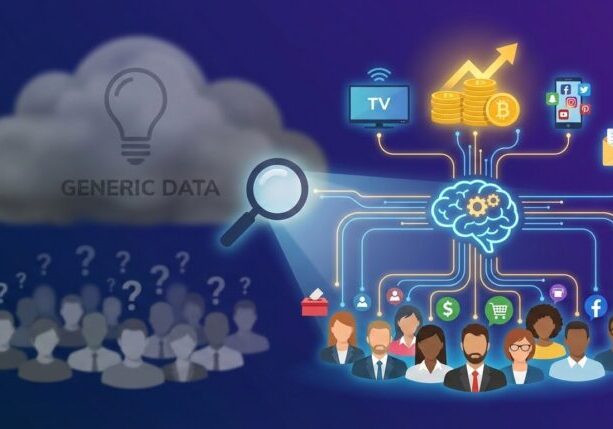
When it comes to attribution data, identity resolution is foundational. Without the ability to recognize and connect individual customer interactions across platforms and devices, attribution accuracy quickly breaks down. Identity resolution addresses this challenge by consolidating disparate data points into a single, unified customer profile.
This process enables marketers to move beyond siloed data and gain a comprehensive view of how customers interact across marketing channels. From the first impression to the final conversion, identity resolution ensures that each interaction is accurately associated with the right individual, providing a clearer understanding of the full customer journey.
Supporting Attribution Models with Unified Customer Profiles
By creating a unified identity, marketers can effectively apply both single-touch attribution models and multi-touch attribution models. Single-touch attribution models assign credit to a single interaction, while multi-touch attribution models distribute credit across multiple touchpoints. These models—including linear attribution and time decay models—rely on accurate identity data to function properly.
With reliable identity resolution in place, marketers can confidently analyze attribution data, evaluate marketing performance, and understand how different marketing efforts contribute to conversions over time.
Identity Graphs and Data-Driven Attribution
Connecting Data Across Touchpoints
Identity data companies play a critical role in enabling accurate attribution by providing sophisticated identity graph. These identity graphs map relationships between devices, platforms, and data sources, allowing marketers to connect online and offline interactions into a single view.
By leveraging identity graph, marketing teams can track customers as they move across multiple touchpoints, from email and display advertising to CTV, OTT, and offline engagements. This level of visibility is essential for achieving data-driven attribution and understanding the true influence of each interaction along the customer journey.
Enhancing Marketing Attribution Strategy
Identity graphs help marketers go beyond surface-level metrics by revealing how customers interact with campaigns across time and channels. This deeper insight enables teams to refine their marketing attribution strategy, allocate resources more effectively, and align marketing efforts with customer intent.
When marketing teams can clearly see which touchpoints influence conversions, they are better equipped to optimize campaigns, improve messaging, and drive stronger results across marketing and sales initiatives.
Data Enhancement: Improving Attribution Accuracy and Insights
The Importance of High-Quality Data
Effective attribution depends heavily on data quality. Even the most advanced analytics tools and attribution models cannot deliver accurate insights if the underlying data is incomplete or outdated. This is where data enhancement becomes essential.
Data enhancement involves enriching raw data with additional attributes and correcting inaccuracies to create a more complete and reliable dataset. By enhancing customer data, marketers can gain more actionable insights into customer behavior and engagement patterns.
Integrating Offline and Online Data
One of the biggest challenges in marketing attribution is connecting offline data with digital interactions. By integrating offline data sources—such as CRM systems, purchase histories, and demographic data—with online behavioral data, marketers gain a more holistic view of the customer journey.
Techniques like data onboarding and data appending help improve data accuracy and completeness. These processes support better attribution analysis, improved audience segmentation, and more effective marketing strategy execution. Clean, enriched data also ensures stronger data hygiene, which is critical for reliable analytics and long-term success.
Attribution in CTV and OTT Advertising
Addressing Measurement Challenges
CTV and OTT advertising have become essential components of modern marketing strategies, but they introduce unique attribution challenges. Customers interact with CTV and OTT content across devices and environments, making it difficult to track engagement and measure performance using traditional attribution methods.
Accurate attribution in these channels requires advanced solutions capable of tracking user interactions across multiple touchpoints while maintaining privacy compliance. Without proper attribution, marketers may struggle to understand how CTV and OTT campaigns influence the customer journey.
Optimizing Ad Spend and Performance
Effective CTV targeting and OTT targeting enable marketers to measure engagement more accurately and optimize ad spend. By understanding how customers interact with ads across these platforms, marketing teams can refine their targeting strategies, improve campaign performance, and drive better outcomes.
When combined with identity resolution and enhanced attribution models, CTV and OTT attribution provides valuable insights into how these channels contribute to overall marketing and sales success.
Omnichannel Campaigns and Attribution Alignment
Centralizing Data Across Marketing Channels
Running successful omnichannel campaigns requires the ability to unify data from multiple marketing channels into a single, accessible view. By centralizing attribution data, marketers can quickly analyze performance across platforms and understand how customers interact with campaigns at every stage of the customer journey.
This unified approach eliminates the need to sift through legacy data systems and disconnected tools. Instead, marketers gain real-time access to insights that support faster decision-making and more effective campaign optimization.
Supporting Marketing and Sales Collaboration
Accurate attribution also strengthens collaboration between marketing and sales teams. When both teams have access to the same data and insights, they can align strategies, prioritize high-impact touchpoints, and improve the efficiency of the sales cycle.
Attribution insights help identify which marketing efforts generate the most qualified leads and which interactions accelerate conversions. This alignment ensures that marketing and sales work together toward shared business goals.
Leveraging Identity Marketing for Smarter Decisions
As an identity marketing company, Stirista enables marketers to bring all of this information together seamlessly. With a robust identity graph at the core, there is no need to wait for manual data matching or rely on outdated legacy systems. The identity graph does the heavy lifting, connecting data points and delivering a complete view of each prospect.
This comprehensive view includes personal details that help individualize marketing efforts—from consumer interests and professional information to financial insights and behavioral data. With access to enriched identity data, marketers can make smarter data-driven decisions, refine marketing strategies, and activate audiences with greater precision.
Driving Better Outcomes with Advanced Attribution
Attribution is no longer a nice-to-have capability—it is a necessity for modern marketing success. By combining identity resolution, data enhancement, and advanced attribution models, marketers gain the clarity needed to measure what truly matters.
With the right analytics tools and attribution framework in place, organizations can better understand customer behavior, optimize marketing efforts, and demonstrate measurable return on investment. As marketing environments continue to evolve, accurate attribution will remain essential for driving sustainable growth and achieving long-term business goals.
Featured Content